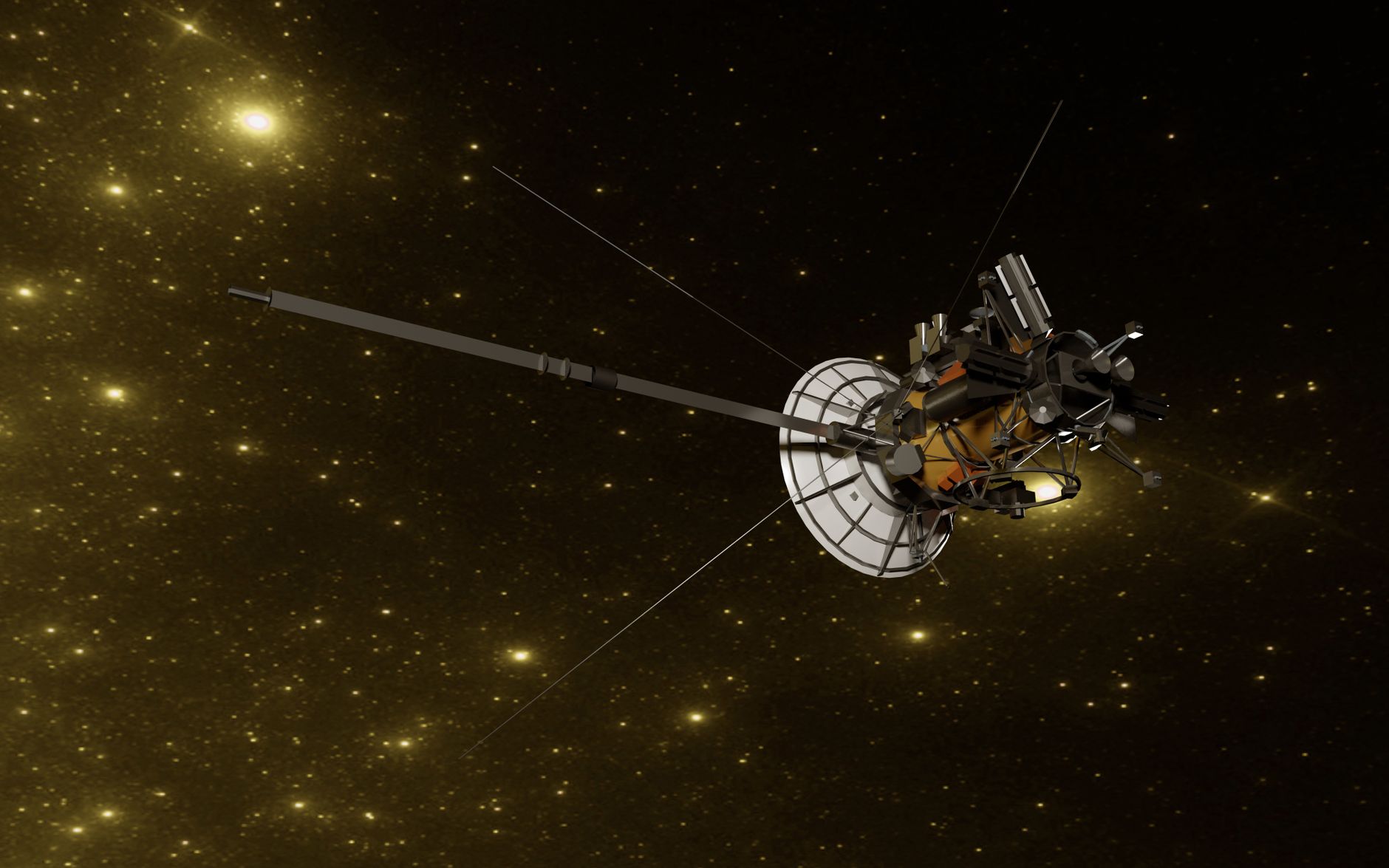
NASA Voyager mission has achieved another remarkable milestone, showcasing its enduring legacy in space exploration. This latest achievement highlights the mission’s ongoing contributions to our understanding of the universe.
Overview of the NASA Voyager mission
The NASA Voyager mission, launched in 1977, has significantly advanced our understanding of the outer solar system and beyond. Voyager 1 and Voyager 2 were designed to explore the planets Jupiter and Saturn, as well as their moons and rings. Over the decades, these spacecraft have transmitted invaluable data, reshaping our knowledge of these distant worlds.
As they journey further into space, the Voyager probes continue to provide insights into the heliosphere, the protective bubble created by the solar wind. They have also crossed into interstellar space, marking a historic achievement for humanity. Recently, the Voyager mission reached another milestone, showcasing the resilience and longevity of the technology that has withstood the harsh conditions of space for over four decades.
Key objectives of the Voyager mission include:
- Studying planetary atmospheres and magnetic fields
- Mapping the structure of the outer solar system
- Investigating cosmic rays and interstellar medium
The data collected from the Voyager mission not only enhances our scientific knowledge but also inspires future generations of explorers. As these spacecraft continue their journey, they remain a testament to human ingenuity and the quest for discovery in the vast universe.
Recent achievements of the Voyager spacecraft
The NASA Voyager mission has recently marked another significant achievement in its long journey through interstellar space. Launched in 1977, the Voyager spacecraft have been pioneers of deep space exploration, providing invaluable data about our solar system and beyond.
As of Wednesday morning, Voyager 1 and Voyager 2 have successfully completed a series of critical maneuvers that enhance their ability to communicate with Earth. This latest milestone demonstrates the resilience and ingenuity behind the NASA Voyager mission.
The following are some of the recent achievements of the Voyager spacecraft:
- Extended Communication: Both Voyager 1 and Voyager 2 have maintained communication with mission control, allowing scientists to receive data from vast distances.
- New Data Collection: The spacecraft continue to gather and transmit data on cosmic rays, magnetic fields, and other phenomena in interstellar space.
- Longevity Records: Voyager 1 has become the most distant human-made object in space, traveling over 14 billion miles from Earth.
- Cultural Impact: The Voyager Golden Record, a time capsule of humanity, remains a symbol of our quest to connect with extraterrestrial intelligence.
These accomplishments not only highlight the technical achievements of the NASA Voyager mission but also inspire future generations to explore the cosmos.
Impact of Voyager on space science
The NASA Voyager mission has profoundly influenced space science since its launch in the late 1970s. The mission’s primary objective was to explore the outer planets, but its impact extends far beyond its original goals.
One significant contribution of the Voyager spacecraft is the wealth of data collected, which has enhanced our understanding of the solar system. Key impacts include:
- Discovery of new moons: Voyager missions revealed previously unknown moons around Jupiter and Saturn, enriching our knowledge of these gas giants.
- Planetary atmospheres: The detailed analysis of planetary atmospheres has provided insights into weather patterns and atmospheric compositions.
- Magnetic fields: Voyager’s instruments have helped map the magnetic fields of several planets, leading to a deeper comprehension of planetary dynamics.
- Interstellar space: Data from Voyager 1 and Voyager 2 have offered humanity its first glimpses into interstellar space, expanding our understanding of the universe beyond the solar system.
Moreover, the Voyager mission has inspired generations of scientists and enthusiasts. Its legacy continues as it pushes the boundaries of exploration, demonstrating the importance of long-term space missions in answering fundamental questions about our celestial neighbors and the universe at large.
Future goals for NASA’s Voyager mission
The future goals for NASA’s Voyager mission are centered around expanding our understanding of the outer solar system and interstellar space. As both Voyager 1 and Voyager 2 continue their journeys, several ambitious objectives have been outlined for the coming years.
- Study Cosmic Rays: One of the primary goals is to further investigate the cosmic rays that the spacecraft encounter beyond the heliosphere. This data will provide insights into the behavior of high-energy particles in interstellar space.
- Explore Magnetic Fields: The Voyager mission aims to measure the interstellar magnetic field. Understanding this field is crucial for comprehending the environment beyond our solar system.
- Communicate with Earth: NASA plans to maintain communication with the Voyager spacecraft, which is currently over 14 billion miles away. This will involve developing new techniques to enhance the signals sent back to Earth.
- Long-Term Data Collection: The mission will continue to collect and transmit data about the solar wind and plasma waves, contributing to a comprehensive understanding of the heliosphere’s boundary.
With these goals, the NASA Voyager mission is set to pave the way for future discoveries in space science, demonstrating humanity’s relentless curiosity and commitment to exploring the unknown.
Challenges faced during the mission
The NASA Voyager mission has been a remarkable journey through space, but it has not been without its challenges. Since their launch in 1977, both Voyager 1 and Voyager 2 have faced a myriad of obstacles that tested the limits of technology and human ingenuity.
One major challenge was the vast distances involved. Communication delays of up to 22.5 hours, depending on the spacecraft’s position, made it difficult to send commands and receive data in real-time. Engineers had to develop sophisticated systems to ensure that the spacecraft could operate autonomously during these long periods of silence.
Another significant hurdle was the harsh environment of space. The Voyagers encountered intense radiation and extreme temperatures, particularly as they traveled through the outer planets’ magnetic fields. To mitigate these risks, NASA designed the spacecraft with robust shielding and employed innovative engineering solutions to maintain functionality.
Additionally, maintaining power has been a continuous concern. The Voyager spacecraft rely on radioisotope thermoelectric generators, which produce diminishing power over time. This required mission planners to prioritize instruments and systems to ensure the continued operation of key scientific functions.
Despite these challenges, the NASA Voyager mission has persevered, providing invaluable data and insights into the outer solar system and beyond.
Public interest in the Voyager journey
The NASA Voyager mission has captured the imagination of the public since its launch in 1977. As the spacecraft continue their journey into interstellar space, interest has surged among space enthusiasts, scientists, and even casual observers. The recent achievement of reaching another milestone has reinvigorated discussions about the mission’s significance and the wonders it reveals about our universe.
Public engagement has taken various forms, including:
- Social media campaigns: NASA’s active presence on platforms like Twitter and Instagram has allowed millions to follow Voyager’s journey in real-time.
- Educational programs: Schools and universities are integrating the Voyager mission into their curricula, inspiring a new generation of scientists and engineers.
- Community events: Planetariums and science centers host events to celebrate milestones, allowing people to learn more about the mission and its findings.
Furthermore, the ongoing transmission of data back to Earth has kept the public intrigued. Every new discovery, whether it’s about cosmic rays or interstellar phenomena, adds to the narrative of human exploration of the final frontier. The NASA Voyager mission not only expands our understanding of the cosmos but also fosters a shared sense of wonder among people from all walks of life.
The recent milestone achieved in the NASA Voyager mission marks a significant advancement in our understanding of the outer solar system. As the spacecraft continues its journey, the data collected from the NASA Voyager mission will provide invaluable insights for future explorations.
Photo by Paul Seling on Pexels